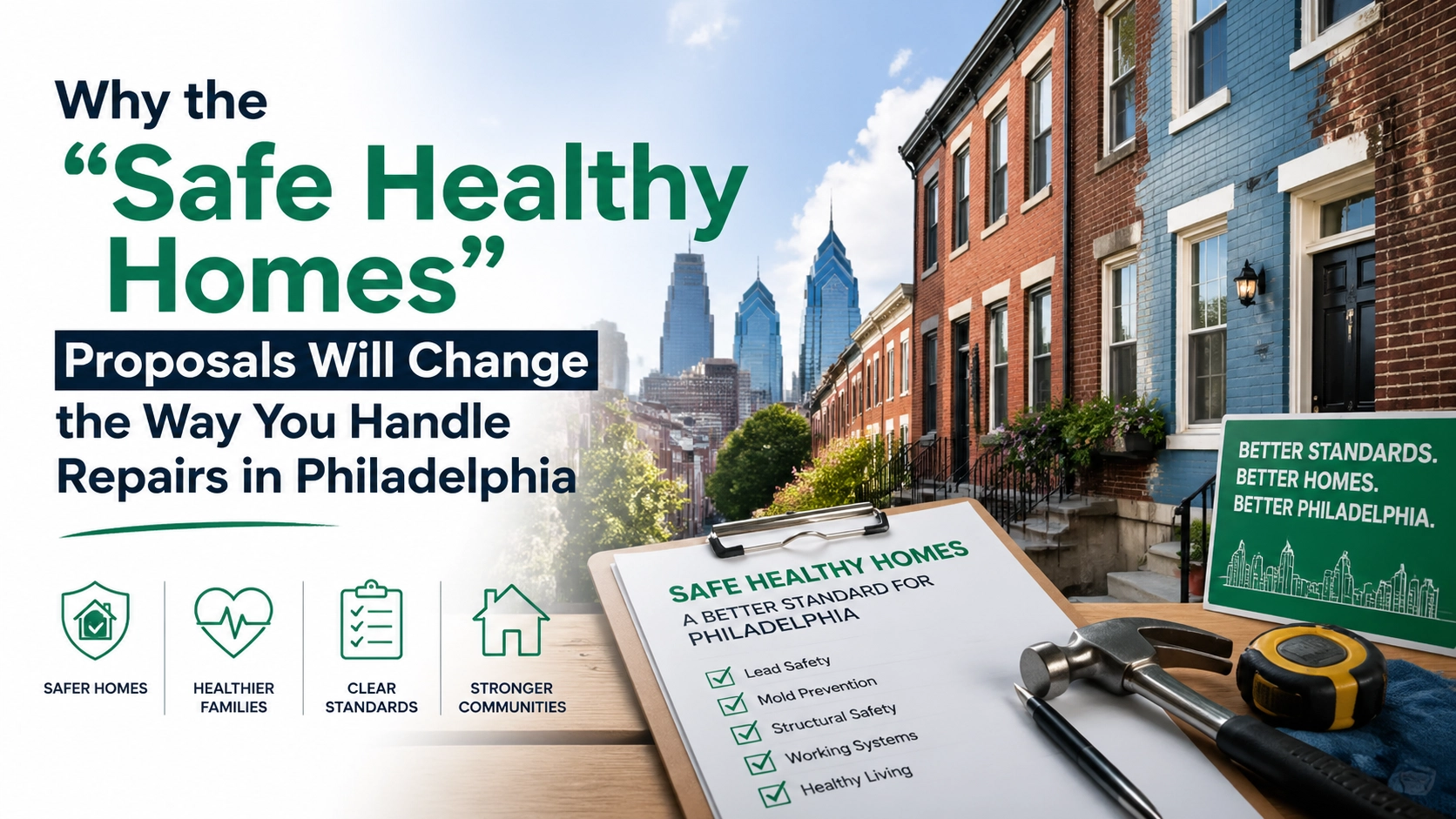
For decades, the relationship between Philadelphia landlords and the Department of Licenses and Inspections (L&I) has been largely reactive. An issue would arise, a tenant might call 311, and an inspector might: eventually: show up to issue a violation. However, as we move through 2026, the landscape of property management in the city is undergoing its most significant shift in a generation.
The "Safe Healthy Homes" proposals are not just a collection of new rules; they represent a fundamental pivot in how Philadelphia ensures the safety of its aging housing stock. With an estimated 40% of the city’s rental properties requiring some level of repair, the city is moving away from the "wait and see" approach toward a mandate of proactive accountability.
For property owners and managers, this means the old strategy of "if it isn't broken, don't fix it" is officially a liability. If you aren't already transitioning your operations to meet these new standards, you are likely falling behind.
The Shift to Proactive Rental Inspections
The cornerstone of the Safe Healthy Homes legislation is the authorization for the city to create a Proactive Rental Inspection Program. Unlike the current system, where inspections are triggered by complaints, this new program allows inspectors to examine properties before a tenant even moves in.
This model, which draws inspiration from successful programs in other major metropolitan areas, makes property inspections a condition of holding a rental license. In short: no inspection, no license. And in Philadelphia, no license means no legal right to collect rent.
This change essentially forces landlords to treat their properties with the same rigor as a commercial airline treats its fleet. You cannot wait for an engine failure (or a collapsed ceiling) to take action. You must prove the "airworthiness" of your unit before it ever takes flight. This is why many owners are now looking for a quick-start guide to getting ahead of these inspections to ensure they aren't caught in a cycle of failed walk-throughs and lost revenue.

Licensing and the Threat of Back Rent Lawsuits
Perhaps the most aggressive component of the new proposals involves financial accountability. Under the Safe Healthy Homes framework, the requirements for maintaining an active rental license and a Certificate of Rental Suitability are being tightened significantly.
While these documents have always been required, the consequences for failing to provide them are becoming much more severe. The proposals clarify that renters have the right to sue for back rent if they discover their landlord has been illegally collecting payments without the proper licensing or suitability certificates.
Imagine a scenario where a tenant lives in a unit for two years, pays rent on time, but then discovers the landlord never renewed their suitability certificate. Under these new rules, that landlord could be forced to refund a significant portion of that income. This turns administrative paperwork into a high-stakes financial risk. To avoid this, it is critical to understand the 7 key inspection changes property managers need to know to remain fully compliant.
Expanding "Good Cause" Protections
In the past, "Good Cause" eviction protections in Philadelphia primarily protected month-to-month tenants or those with leases under one year. The Safe Healthy Homes proposals seek to expand these protections to all renters, regardless of the length of their lease.
This is a direct response to concerns about retaliation. Historically, if a tenant complained about a leak or a lack of heat, a landlord might simply choose not to renew their lease at the end of the year to avoid dealing with the "troublesome" tenant. By expanding Good Cause protections, the city is making it much harder to use non-renewal as a tool for retaliation.
For property managers, this means you must have a documented, legal reason for terminating a tenancy. It also means that repair requests must be handled with extreme professionalism. If you fail to address a repair and then attempt to end a lease, you could be facing a lawsuit based on 2025 tenant rights.
Throwback Case File: The 1994 Kensington Boiler Disaster
To understand why the city is pushing for such "extreme" proactive measures, we only have to look back at the history of the city's housing disasters. In the winter of 1994, a multi-unit property in Kensington became a grim example of the dangers of reactive maintenance.
The property owner had ignored repeated requests from tenants regarding the smell of gas and a banging sound coming from the basement. At the time, the city’s inspection department was overwhelmed and reactive; without a formal 311 report that reached the top of the pile, the building remained uninspected. In mid-February, the boiler: which dated back to the late 1950s: suffered a catastrophic failure, leading to a small explosion and a fire that displaced 12 families.
Investigation revealed that the owner hadn't performed a professional service on the heating system in over seven years. Under today's (and tomorrow's) Safe Healthy Homes standards, that building would have been flagged years earlier during a proactive inspection. The owner would have been forced to upgrade the system or lose their license. While the 1994 incident resulted in heavy fines, today’s laws would likely lead to total rent forfeiture and potential criminal negligence charges.
This serves as a reminder that preventive maintenance in Philadelphia isn't just about saving money: it's about survival.
Handling Repairs in the New Era: The C&A Approach
With the city moving toward a proactive model, how should property managers adjust their day-to-day operations? The answer lies in shifting from a "vendor-on-speed-dial" approach to an "integrated partnership" approach.
1. Stop Juggling 15 Different Vendors
When an inspector shows up for a proactive check, they aren't just looking at the plumbing. They are looking at lead paint, mold, pests, structural integrity, and electrical safety all at once. If you are hiring separate contractors for each, your chance of a miscommunication: and a failed inspection: skyrockets. The most successful managers are moving toward all-in-one property service solutions to ensure consistency.
2. Prioritize "Health" Fixes Over "Aesthetic" Fixes
The Safe Healthy Homes proposals focus heavily on environmental hazards. Lead, mold, and pest infestations are no longer just "nuisances"; they are legal triggers for license revocation. You need to focus on 10 preventive fixes that pass health inspections every time, rather than just worrying about new carpets or paint.
3. Implement Systematic Turnovers
The time between tenants is the most critical window for compliance. In the new regulatory climate, a turnover isn't just about cleaning; it’s about a full compliance audit. You need to cut turnover time in half while simultaneously increasing the quality of the work to meet proactive inspection standards.

The Cost of Non-Compliance vs. The Value of Maintenance
Many landlords argue that these new proposals will drive up costs and force smaller owners out of the market. While the initial investment in maintenance can be daunting, the cost of non-compliance is significantly higher.
A single code violation can cost thousands in fines, but the loss of a rental license or a back-rent lawsuit can cost tens of thousands. Furthermore, properties that are well-maintained according to these "Safe Healthy Homes" standards naturally attract higher-quality tenants and command higher rents.
By partnering with a dedicated property services firm, you can turn these new regulations into a competitive advantage. While other owners are struggling with costly code violations, your properties will be certified, compliant, and consistently profitable.
Conclusion: Don't Wait for the Inspector to Knock
The "Safe Healthy Homes" proposals are a clear signal that the city of Philadelphia is no longer willing to tolerate substandard housing. Whether you agree with the legislation or not, the reality is that the era of reactive repairs is ending.
At C&A Property Services, we specialize in helping property managers and owners navigate these complex changes. From guaranteed PHA inspection passes to comprehensive turnover services, we provide the expertise needed to keep your portfolio safe, healthy, and licensed.
Don't wait for a proactive inspection to reveal your property's weaknesses. Start your preventive maintenance journey today and ensure your business is ready for the future of Philadelphia real estate. Explore our property blog for more insights, or contact C&A Property Services directly to schedule a compliance audit.
Leave a Reply