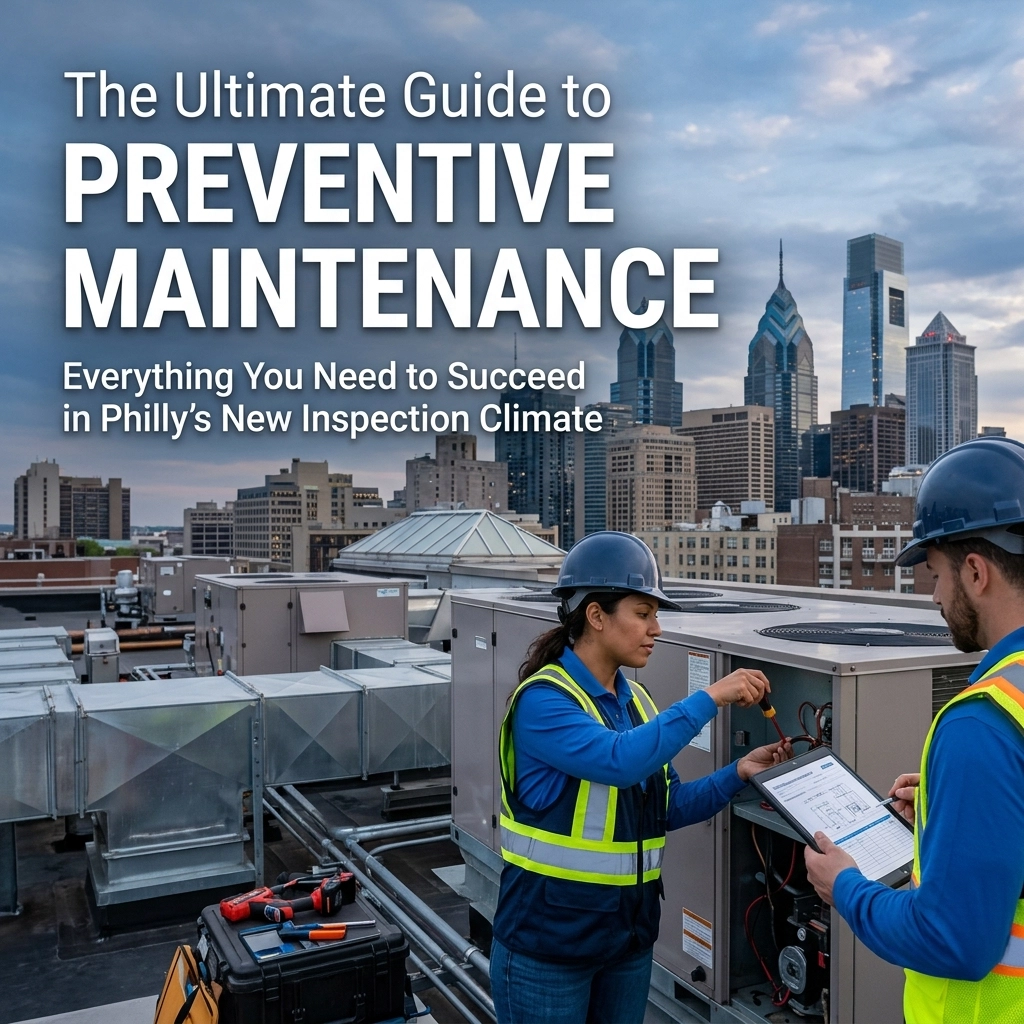
Philadelphia is a city of history, charm, and: as every property owner knows: some of the most demanding aging infrastructure in the country. From the classic 19th-century rowhomes in South Philly to the industrial-to-residential conversions in Fishtown, maintaining a property here isn't just about curb appeal; it’s about survival.
In 2026, the landscape of property management in Philadelphia has shifted. We are no longer in the era of "wait until it breaks." With the Department of Licenses and Inspections (L&I) rolling out the Proactive Inspection Program and the rigorous standards of the Safe Healthy Homes Act, the city is demanding more from its landlords and property managers.
If you aren't staying ahead of the curve, you aren't just risking a leaky roof: you’re risking your rental license. This guide will walk you through the essential preventive maintenance strategies needed to thrive in Philly’s new inspection-heavy climate.
The Changing Winds: Why Proactive is the New Standard
For decades, many Philadelphia property owners operated on a reactive basis. If a tenant called about a leak, you sent a plumber. If the heater died in January, you called for an emergency repair. However, the city's new regulatory stance has made this approach financially unsustainable.
The introduction of proactive rental inspections means that L&I is no longer waiting for a complaint to knock on your door. They are systematically checking properties for safety, lead compliance, and structural integrity. Couple this with the Philadelphia Safe Healthy Homes Act, and the margin for error has disappeared.

Seasonal Maintenance: Fighting the Philly Elements
Philadelphia experiences the full spectrum of the Mid-Atlantic climate: freezing winters that burst pipes and humid summers that breed mold. A successful preventive maintenance plan is built around the calendar.
Spring: The Recovery Phase
After a long winter, spring is your window to repair damage before the summer humidity hits.
- Roofing and Gutters: Philly rowhomes are notorious for flat roofs. Winter ice dams can pull at seams. Clean your gutters now to prevent the April showers from backing up into your top-floor ceilings.
- HVAC Prep: Don't wait for the first 90-degree day in June to find out the A/C capacitor is blown. A spring tune-up can identify preventive fixes that save you from emergency weekend rates.
- Exterior Masonry: Inspect the brickwork. Small cracks in the mortar (pointing) can lead to major water intrusion during summer storms.
Fall: The Fortification Phase
Fall is about sealing the envelope before the frost arrives.
- Heating Systems: Test the boiler or furnace in October. In Philadelphia, if a tenant is without heat when the temperature drops below 55°F, you are in immediate violation of city code.
- Pipe Insulation: In older buildings with exposed plumbing in basements or crawlspaces, insulation is your best friend. A $10 piece of foam can prevent a $5,000 flood.
- Chimney and Venting: Ensure that exhaust flues are clear. Carbon monoxide is a major focus for L&I inspectors during the winter months.
Case File: The North Philly Freeze of 1994
To understand why we emphasize preventive maintenance, we only have to look back at the "Great Freeze" of January 1994. Philadelphia hit record lows of -5°F. At C&A Property Services, we often look at historical disasters to inform our current strategies.
In 1994, a multi-unit complex in North Philly suffered a catastrophic failure when the main water line, located in an uninsulated utility closet, burst. Because the property manager hadn't performed a fall insulation check, the burst flooded three floors, displaced twelve families, and resulted in structural damage that took six months to repair. In today’s regulatory environment, such an incident wouldn't just be an insurance claim; it would likely result in the immediate revocation of the property’s Certificate of Rental Suitability and massive fines under the 2025 tenant rights laws.

The "Big Three" of Compliance: Lead, Mold, and Pests
If you want to beat costly code violations, you must master the three pillars of the Safe Healthy Homes Act.
- Lead Paint: For any property built before 1978, lead certification is no longer optional: it’s a prerequisite for a rental license. Preventive maintenance means regularly checking window sills and door frames for "friction surfaces" where paint might chip or dust might accumulate.
- Mold and Moisture: Philadelphia’s humidity is a mold spore’s best friend. Proactive maintenance involves checking under sinks, around toilets, and in basements for any sign of dampness. Addressing a small leak today prevents a five-figure mold remediation project tomorrow.
- Pest Control: L&I inspectors look for points of entry. Sealing gaps in foundations and ensuring trash is managed properly aren't just "nice to do": they are essential for passing your PHA inspections.
High-Stakes Maintenance: Fire Escapes and Structure
One of the most overlooked aspects of Philadelphia property law is the structural inspection requirement. City code requires that any building with a fire escape or a balcony must have those structures inspected by a professional engineer every five years.
If your property is over ten years old, you are likely already due. Neglecting this isn't just a fine; it’s a life-safety issue. We’ve seen cases where rusted bolts on a fire escape led to immediate building "Unsafe" designations by L&I, forcing tenants out within hours. Regular scraping, priming, and painting of metal fire escapes can add decades to their lifespan and keep you in the city’s good graces.

The Financial Reality: ROI of Proactive Care
Many owners hesitate at the cost of preventive maintenance, but the math tells a different story. The cost of a turnover in Philadelphia has skyrocketed, with some owners struggling with $4,000+ costs per unit.
When you maintain a property proactively:
- Tenant Retention Increases: Happy tenants don't move. 82% of Philadelphia tenants cite "maintenance response and quality" as a top reason for leaving or staying.
- Emergency Costs Plummet: An emergency plumber on a Sunday night costs three times as much as a scheduled repair on a Tuesday morning.
- Asset Value Grows: Well-maintained properties command higher rents and higher resale values. For condo boards, maintenance upgrades are the most direct way to protect every owner’s investment.
Stop Juggling, Start Managing
The biggest hurdle to preventive maintenance is often the logistics. Juggling a roofer, an HVAC tech, a plumber, and a lead inspector is a full-time job. This is where many property managers fail: they simply don't have the time to coordinate 15 different vendors.
At C&A Property Services, we built our business to solve this exact problem. We are the all-in-one property services solution for Philadelphia. Instead of calling multiple contractors, you have one partner who understands the local codes, the weather patterns, and the L&I inspectors’ expectations.
Whether it’s junk removal during a turnover or a full-scale preventive maintenance audit, having a single reliable partner ensures that nothing falls through the cracks.
Conclusion: The Path Forward
The "New Inspection Climate" in Philadelphia doesn't have to be a source of stress. It is simply a new set of rules for a city that is finally prioritizing the safety and longevity of its housing stock. By adopting a preventive mindset, utilizing seasonal checklists, and stopping the "bleeding" of money on emergency repairs, you can turn maintenance from a headache into a competitive advantage.
Don't wait for the city to send you a violation notice. Take control of your portfolio today.
For more insights on navigating the Philadelphia rental market, check out our Property Blog or reach out to us at capropserv.com to see how we can streamline your maintenance and compliance needs.
Leave a Reply