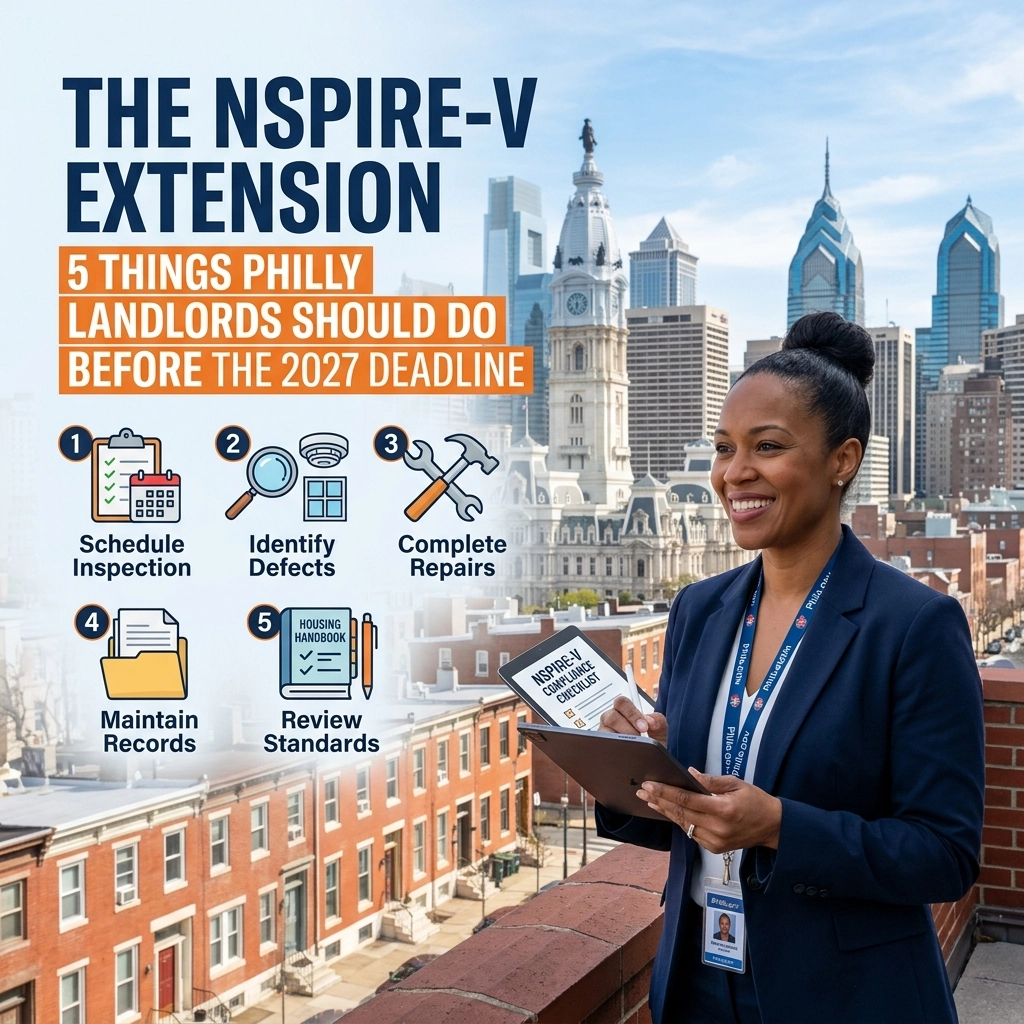
For Philadelphia landlords and property managers operating within the Housing Choice Voucher (HCV) program, the recent news from HUD regarding the NSPIRE-V (National Standards for the Physical Inspection of Real Estate for Vouchers) extension comes as a welcome relief. Originally slated for a 2025 rollout, the mandatory compliance deadline has been officially pushed back to February 1, 2027.
At C&A Property Services, we know that an extension can be a double-edged sword. It provides a much-needed breather for those struggling with the transition, but it also creates a temptation to procrastinate. In the fast-moving Philadelphia rental market: where local laws like the Philadelphia Safe Healthy Homes Act are already tightening the screws: waiting until late 2026 to prepare is a recipe for disaster.
The shift from the old Housing Quality Standards (HQS) to NSPIRE-V isn't just a name change; it’s a fundamental shift in how inspections are categorized and reported. Here are five critical things Philly landlords should do right now to ensure they aren’t caught off guard when the 2027 deadline arrives.
1. Deep-Dive Training on NSPIRE-V Categories
The most significant change under NSPIRE-V is how deficiencies are categorized. Under the old HQS rules, an item often either "passed" or "failed." The new standards introduce a tiered deficiency system: Life-Threatening, Severe, and Standard.
Landlords must ensure their in-house maintenance teams and external contractors are fully trained on these nuances. For instance, a "Life-Threatening" deficiency requires a 24-hour correction window, while a "Standard" deficiency might allow for 30 days. Understanding what triggers these specific labels is the difference between keeping a tenant in place and facing an emergency abatement of your voucher payments.
2. Upgrade Your Digital Infrastructure
HUD is moving toward a paperless, real-time reporting environment. NSPIRE-V emphasizes digital reporting tools that allow inspectors to upload findings instantly. If your current property management software or vendor communication method involves physical clipboards and scanned PDFs, you are already behind.
Philly landlords should seek out partners who use integrated property management software. At C&A Property Services, we prioritize all-in-one property services solutions that streamline documentation. Having a digital trail of your repairs and maintenance logs will be essential when justifying repairs or disputing a failed inspection under the new NSPIRE digital framework.
3. Conduct "Mock" NSPIRE Inspections
Don’t wait for the Philadelphia Housing Authority (PHA) to be the first one to walk through your doors under the new standards. The 2027 deadline extension is the perfect window to conduct internal audits.
By performing mock inspections using the NSPIRE-V criteria now, you can identify systemic issues across your portfolio. Are your GFCI outlets consistently failing? Is the "visual lead assessment" being handled correctly? Pilot testing these standards allows you to spread the cost of repairs over the next several months rather than facing a massive capital expenditure in January 2027. This preventive maintenance approach is the most effective way to protect your ROI in the long run.
 A technician testing a smoke alarm during a mock inspection]
4. Prioritize Non-Deferred Compliance Items (Smoke, CO, and Lead)
While the full NSPIRE-V rollout has been extended, HUD has been very clear: certain safety requirements are not deferred. Congressional mandates regarding Carbon Monoxide (CO) detectors and smoke alarms are already in full effect.
In Philadelphia, lead-based paint compliance remains a non-negotiable priority. Landlords must continue their visual assessments and lead-safe certifications regardless of the NSPIRE-V timeline. If you are struggling to keep up with these specific health inspections, you may want to review our guide on 10 preventive fixes that pass Philadelphia health inspections. Failing these "immediate" items can lead to heavy fines from L&I and PHA long before the 2027 deadline hits.
5. Consolidate Your Vendor List
The transition to NSPIRE-V requires a level of consistency that many "gig-economy" contractors simply cannot provide. When you use 15 different vendors for one turnover, the chances of someone missing a new NSPIRE-V requirement increase exponentially.
The most successful landlords in Philly are moving toward consolidated service partners. Having one reliable partner who understands both the local L&I requirements and the federal HUD standards minimizes the risk of communication gaps. Instead of juggling multiple contractors, a single point of contact ensures that every turnover is handled with the final inspection in mind.
Throwback Case File: The "HQS Nightmare" of 1994
To understand why federal extensions shouldn't be ignored, we only have to look back at the early 90s in Philadelphia. In 1994, a major landlord in North Philly: managing over 80 units: relied on a series of "handyman" fixes to get through his annual PHA inspections. At the time, the standards were shifting, and HUD was tightening the definition of "safe egress."
The landlord assumed he had "time" to fix several basement window violations and faulty smoke alarm placements because the local inspectors hadn't been enforcing them strictly. However, a sudden federal audit of the PHA's voucher program led to a surprise sweep of his properties.
Because he hadn't modernized his maintenance schedule or taken the "new" (at the time) HQS guidelines seriously, 40% of his portfolio failed inspection in a single week. His voucher payments were abated, and he was forced to spend $60,000 in emergency repairs in 30 days to avoid losing his tenants. Had he utilized the "grace period" provided by the transition years to standardize his units, he would have saved thousands in turnover costs and avoided the legal fees that followed.
 A vintage photo of a Philadelphia rowhome street from the 1990s]
How C&A Property Services Can Help
Navigating the road to February 1, 2027, doesn't have to be a solo journey. The Philadelphia rental market is becoming increasingly complex, with new rental laws in 2025 and the looming NSPIRE-V requirements creating a high bar for compliance.
At C&A Property Services, we specialize in helping landlords "get ahead of the curve." Our team is already training on the NSPIRE-V standards to ensure that every unit we touch is prepared for the future. Whether you need a full turnover service, junk removal, or a proactive maintenance plan to beat costly code violations, we are your boots-on-the-ground partner.
Don't let the 2027 extension lull you into a false sense of security. Use this time wisely. Upgrade your properties, train your teams, and partner with professionals who understand the Philadelphia landscape.
Ready to prepare your portfolio for NSPIRE-V?
Contact C&A Property Services today to schedule a consultation and learn how we can help you achieve a PHA inspection pass guarantee. Let’s make the 2027 deadline a non-event for your business.
Leave a Reply