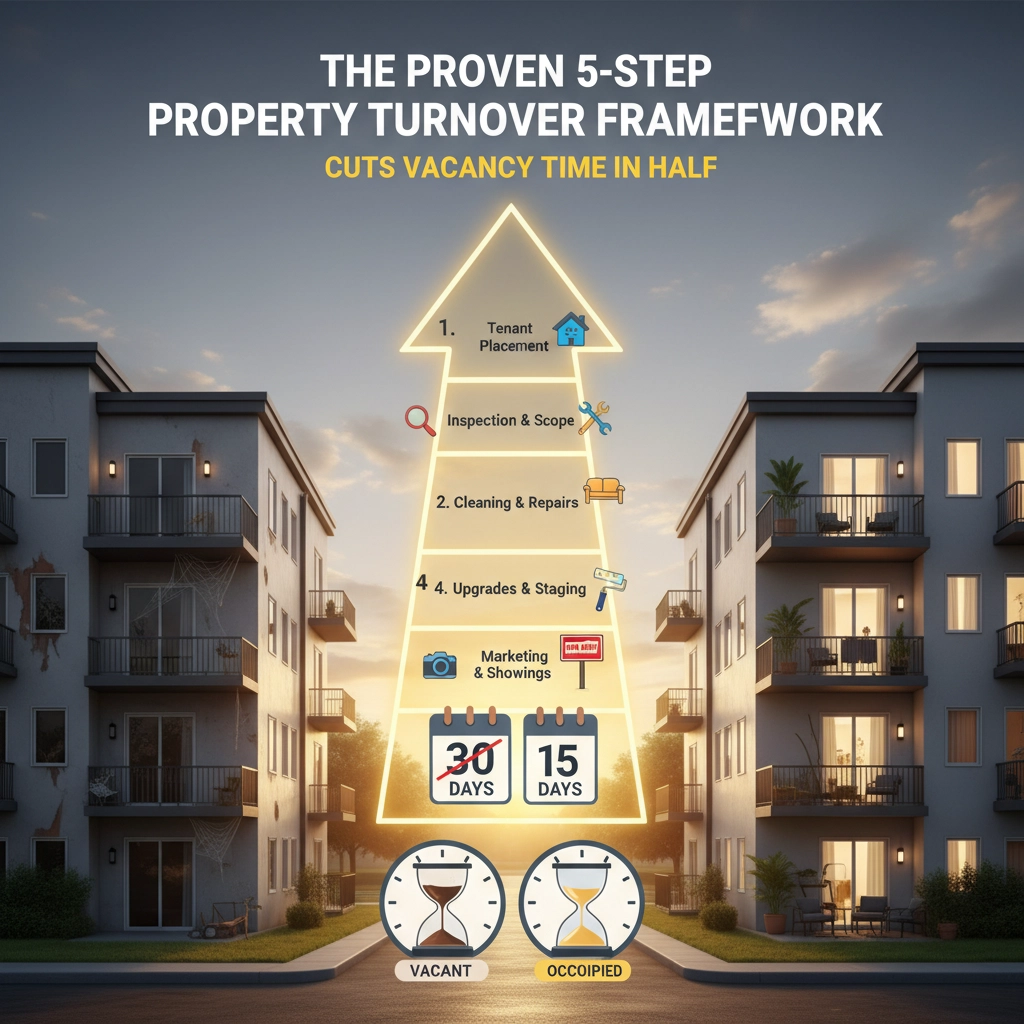
Every day your Philadelphia property sits vacant costs you money. With the average rental turnover taking 21 days according to industry standards, that's three weeks of lost rental income: and often much longer if you're not following a systematic approach.
The difference between successful property managers and those struggling with extended vacancies isn't luck: it's having a proven framework that coordinates every aspect of the turnover process. Here's the 5-step system that professional property management companies use to consistently cut vacancy time in half.
Step 1: Activate the 60-Day Pre-Planning Protocol
The biggest mistake property owners make is waiting until move-out day to start planning. Successful turnovers begin 60 days before the lease ends, not after the tenant hands over the keys.
What to do at 60 days out:
- Schedule a pre-move-out inspection to identify needed repairs
- Order standardized materials (paint, fixtures, flooring samples)
- Alert your contractor network about the upcoming vacancy
- Begin gathering competitive rental data for pricing decisions
- Start preparing marketing materials and photos
This early preparation prevents the domino effect of delays that plague most turnovers. When contractors are pre-scheduled and materials are pre-ordered, you eliminate the 3-5 days typically lost to coordination and supply runs.

Pro tip: Create a master checklist for each property that includes paint colors, fixture specifications, and preferred contractor contacts. This standardization alone can save 2-3 days per turnover.
Step 2: Launch Pre-Leasing at 30-45 Days
While most landlords wait until the unit is move-in ready to start marketing, savvy property managers begin leasing efforts 30-45 days in advance. This strategy can eliminate vacancy time entirely.
Your 30-day pre-leasing timeline:
- List the property with professional photos of similar units
- Schedule showings during the final weeks of the current lease (with proper notice)
- Screen and approve qualified tenants
- Coordinate lease signing for immediate occupancy after turnover completion
The key is being transparent with prospective tenants about the timeline and setting proper expectations. Most quality tenants understand the turnover process and appreciate securing their next home in advance.
Market positioning matters: Price competitively from day one. A property priced $50-100 below market that leases in one week generates more revenue than an overpriced unit that sits vacant for an extra month.
Step 3: Implement the 48-Hour Power Start
Research shows that most turnover work happens in the first 48 hours after move-out. This critical window determines whether your turnover stays on track or extends indefinitely.
Hour 1-24: Assessment and Major Systems
- Complete detailed move-out inspection
- Identify and flag major repairs requiring approvals
- Test all mechanical systems (HVAC, plumbing, electrical)
- Order any specialized materials or appliances needed
Hour 25-48: Deploy Core Trades
- Begin any structural or electrical work
- Start plumbing repairs or improvements
- Schedule flooring contractors for later in the sequence

The secret is sequencing work in the optimal order. Structural work first, then painting and flooring, followed by final cleaning and landscaping. Never schedule painting before plumbing work or cleaning before final maintenance tasks.
Step 4: Execute Coordinated Vendor Management
The difference between a 10-day turnover and a 25-day turnover often comes down to vendor coordination. Professional property managers don't manage contractors: they orchestrate them.
Create your vendor ecosystem:
- Establish pre-negotiated rates with reliable contractors
- Maintain backup options for each trade
- Use contractors who can handle multiple services (painting + minor repairs)
- Require specific scheduling commitments, not vague "we'll fit you in" promises
Digital workflow optimization: Use project management tools or apps to coordinate schedules, track progress, and maintain communication. When everyone knows their role and timing, work flows smoothly without delays.
Quality control checkpoints: Schedule inspections at 25%, 50%, 75%, and 100% completion. Catching issues early prevents rework that can add days to your timeline.
Step 5: Perfect the Handoff Process
The final step separates good turnovers from great ones. Even if everything else goes perfectly, a poor handoff process can add days to your timeline and create problems with new tenants.
Your move-in ready checklist:
- Professional cleaning completed (including windows and appliances)
- All systems tested and functioning
- Fresh batteries in smoke detectors
- New locks installed and keys prepared
- Move-in packet assembled with lease documents and property information
- Utility coordination completed
The pre-move-in walkthrough: Schedule this 24-48 hours before the new tenant's move-in date. This allows time to address any last-minute items without delaying occupancy.

Documentation is crucial: Photo-document the completed turnover for your records and to showcase quality to prospective tenants for future vacancies.
Real-World Results: From 25 Days to 12 Days
Property managers using this systematic approach consistently achieve 10-14 day turnovers versus the industry standard of 21+ days. Here's what that means for your bottom line:
For a $2,000/month rental:
- Standard turnover (21 days): $1,400 in lost rent
- Framework turnover (12 days): $800 in lost rent
- Savings per turnover: $600
Annual impact: With just two turnovers per year, this framework saves $1,200 in lost rent per property. For a portfolio of 10 properties, that's $12,000 annually: not including the reduced contractor costs from better coordination.
Common Implementation Challenges
Challenge 1: Contractor reliability
Solution: Maintain relationships with multiple vendors and always have backup options scheduled.
Challenge 2: Tenant cooperation during pre-leasing
Solution: Offer small incentives for accommodating showings and maintain professional communication.
Challenge 3: Unexpected repair discoveries
Solution: Build 2-3 buffer days into your timeline and maintain an emergency repair budget.
Making It Work for Your Portfolio
This framework scales whether you manage one property or dozens. The key is developing systems and relationships that support consistent execution.
Start by implementing this process on your next vacancy. Document your timeline, costs, and results. Most property owners see immediate improvement, with continued optimization leading to even better results over time.
Professional support makes the difference: While this framework is straightforward, execution requires experience, contractor relationships, and dedicated time management. Many successful property owners find that partnering with experienced property management professionals provides both the expertise and bandwidth needed to consistently achieve these results.
The investment in professional property management often pays for itself through reduced vacancy time, better tenant quality, and optimized maintenance costs: while freeing up your time for other priorities.
Ready to transform your property turnover process? The next vacancy is your opportunity to implement these strategies and experience the difference systematic management makes for your investment returns.
Leave a Reply