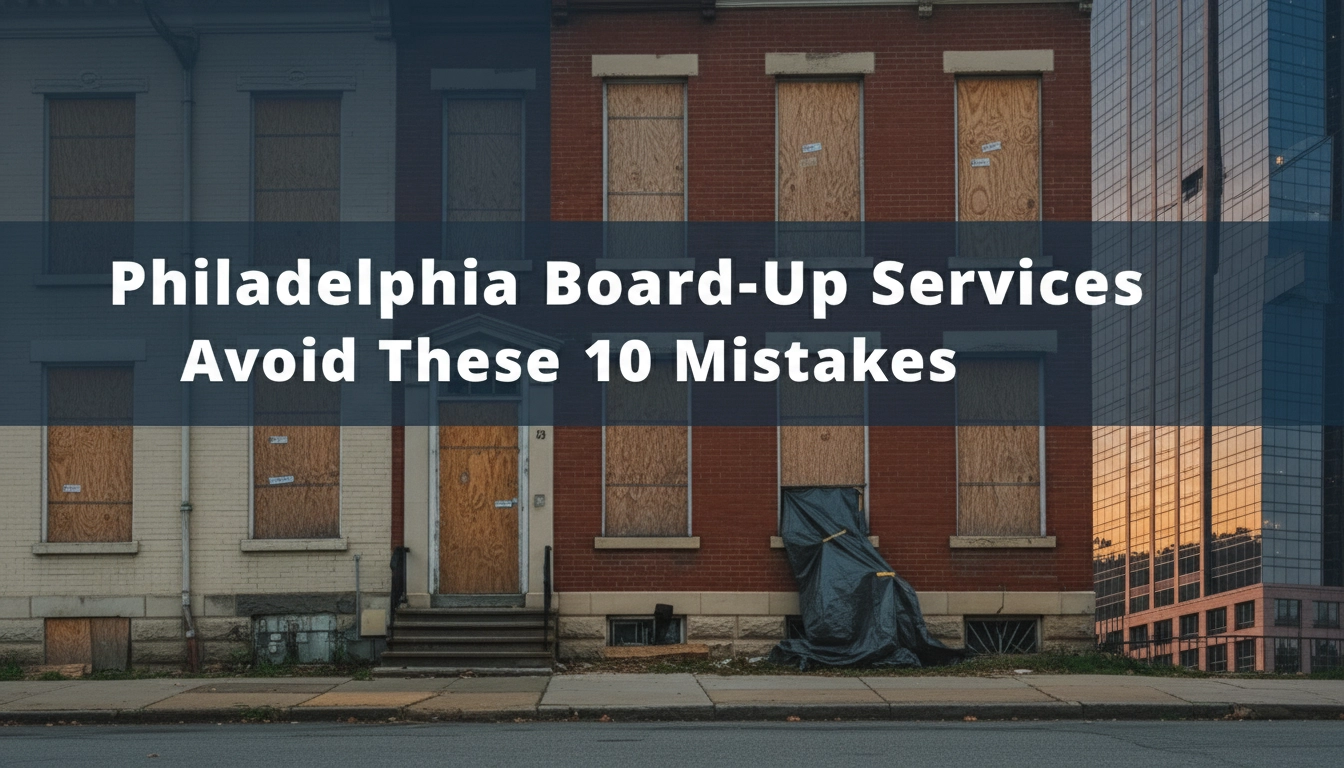
Property damage happens fast, but bad decisions during the board-up process can cost you months of delays and thousands in additional expenses. Whether you're dealing with fire damage, storm destruction, or vandalism, securing your Philadelphia property correctly the first time prevents bigger headaches down the road.
Here are the ten most common board-up mistakes that turn manageable situations into expensive disasters.
1. Waiting Too Long to Secure the Property
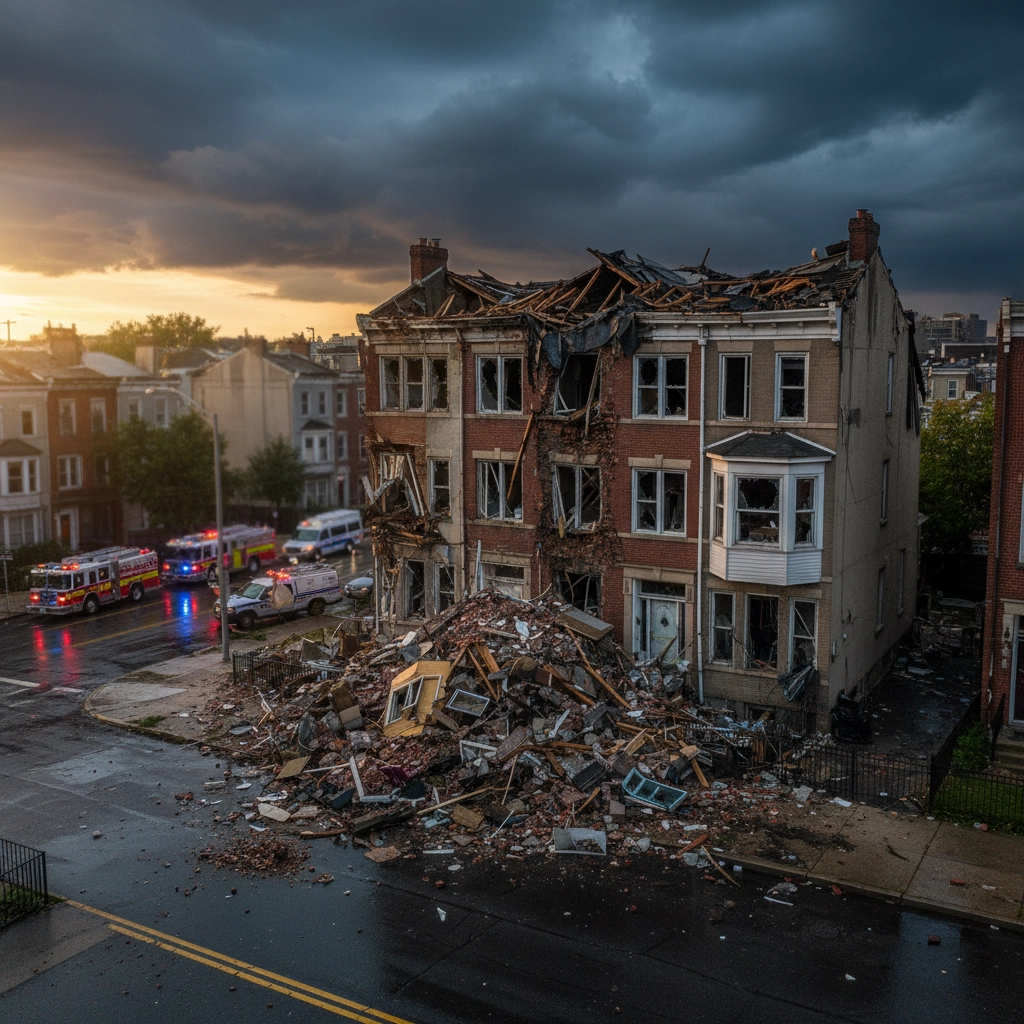
The clock starts ticking the moment damage occurs. Every hour your property sits exposed increases the risk of additional damage from weather, theft, and vandalism. Philadelphia's unpredictable weather can turn a small roof leak into major structural damage within days.
Insurance companies expect prompt action. Most policies require "reasonable and necessary" steps to prevent further loss immediately after an incident. Waiting 48 hours or more can give insurers grounds to deny claims for secondary damage.
2. Using Inadequate Materials
Plywood sheets from the hardware store might seem like an easy fix, but they won't withstand Philadelphia's winters or determined intruders. Standard plywood warps, splits, and provides minimal security.
Professional board-up services use exterior-grade plywood, steel panels, or specialized security boarding designed for long-term protection. The material choice depends on your property's location, the extent of damage, and how long the boards will remain in place.
3. Ignoring Philadelphia Building Codes and Permits
Philadelphia has specific requirements for temporary structures, including board-up installations on commercial properties and multi-family buildings. Some situations require permits, especially for extended boarding periods or when work affects public sidewalks.
Failing to check with L&I (Licenses and Inspections) can result in violations that delay restoration work. The last thing you need during property recovery is a stop-work order because your board-up doesn't meet code requirements.
4. Choosing Contractors Without Proper Credentials
Not all contractors understand emergency board-up requirements. General handymen might know how to install plywood, but they may not understand security considerations, weatherproofing needs, or insurance documentation requirements.
Always verify that board-up contractors carry liability insurance and understand emergency restoration protocols. Check references from other property managers who've used their services during actual emergencies.
5. Inadequate Security Measures
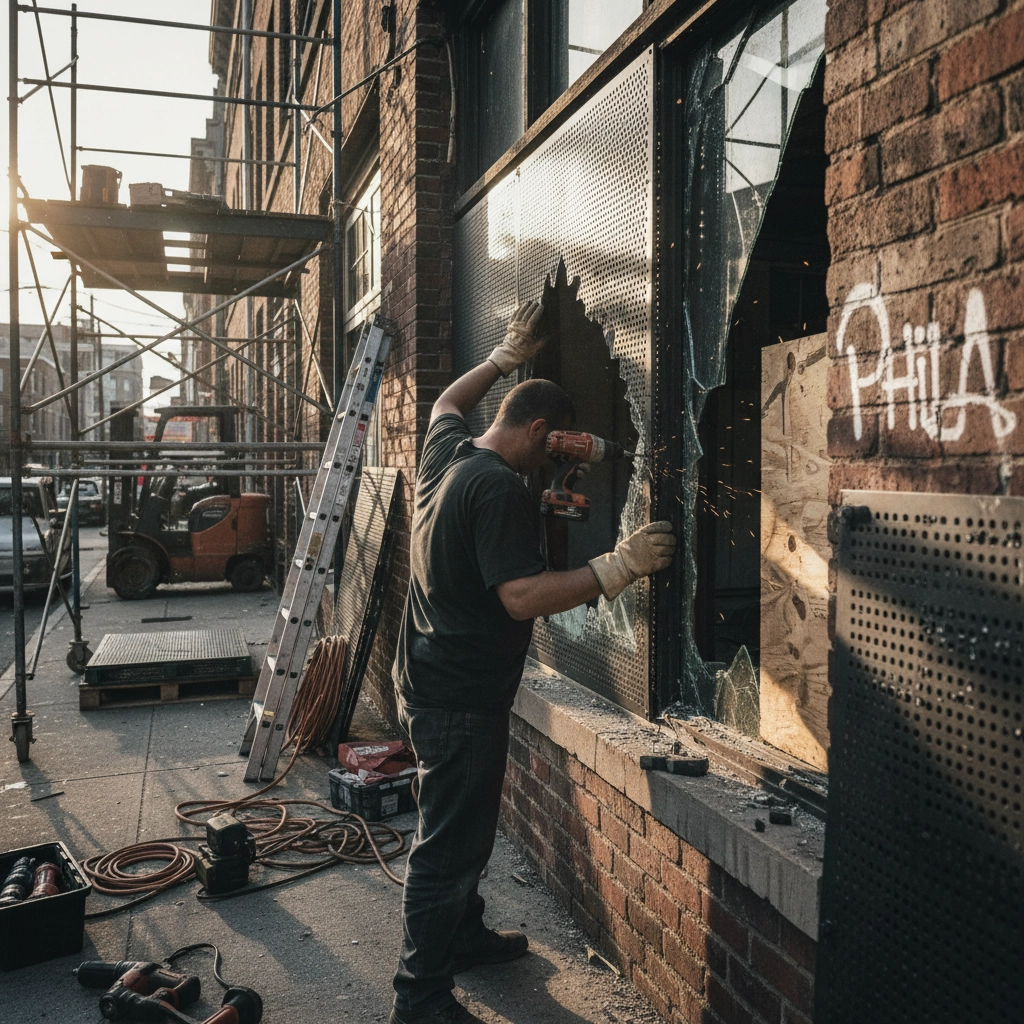
Standard boarding provides weather protection but offers little security against break-ins. Properties in certain Philadelphia neighborhoods require additional security measures like steel plates, security film, or alarm systems.
Consider your property's crime statistics and visibility from the street. A boarded-up building in Center City needs different security measures than a property in a residential area. Visible security measures often deter opportunistic crime better than hidden ones.
6. Poor Documentation for Insurance Claims
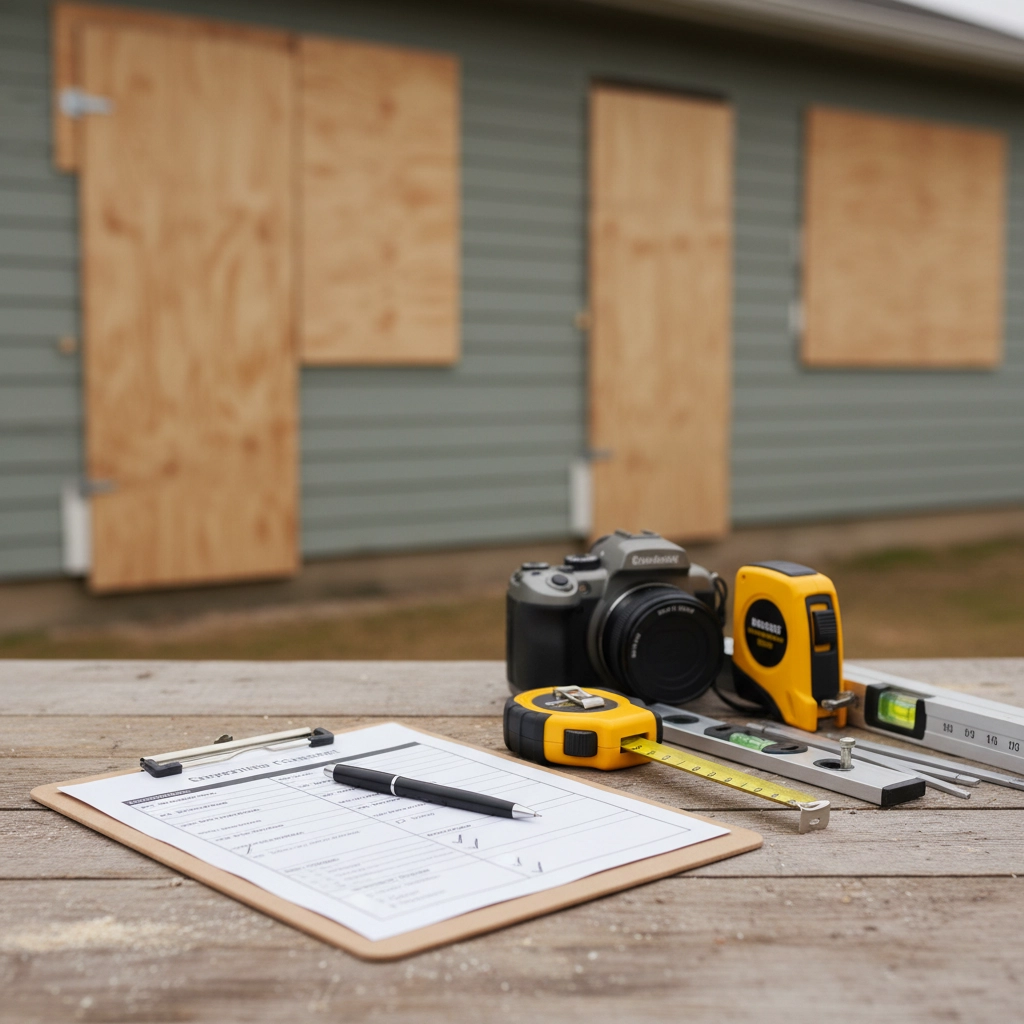
Insurance adjusters need detailed documentation of both the original damage and the board-up work performed. Take photos before, during, and after board-up installation. Document materials used, labor costs, and any additional security measures.
Keep receipts for all board-up expenses. Many policies cover temporary protection costs, but you need proper documentation to get reimbursed. Missing paperwork can delay claim processing by weeks.
7. Forgetting About Weatherproofing
Philadelphia's weather patterns create unique challenges. Summer storms can dump inches of rain in hours, while winter freeze-thaw cycles can create ice dams and water infiltration problems.
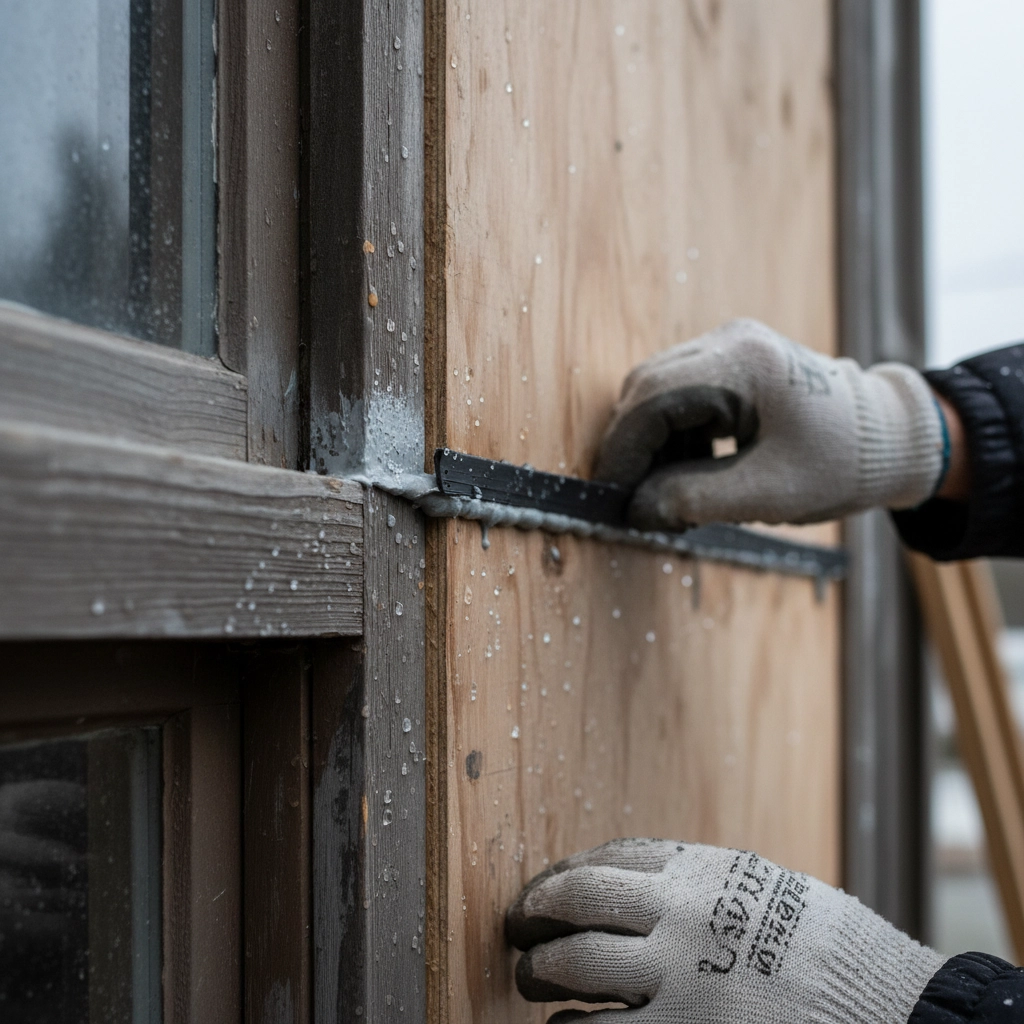
Proper board-up installation includes sealing edges, ensuring water runoff, and preventing ice formation behind boards. Poor weatherproofing leads to mold growth, structural damage, and much higher restoration costs.
8. Underestimating Liability Risks
Improperly secured boards can become projectiles during storms or injure people walking nearby. Philadelphia's densely populated areas mean falling boards can cause serious injuries and expensive lawsuits.
Your liability doesn't end when the boards go up. Regular inspections ensure boards remain secure throughout the protection period. Wind, weather, and time can loosen fasteners and compromise installation integrity.
9. Not Planning for Utility and Access Needs
Boarding up everything might seem logical, but it can create problems for ongoing utility service, inspections, or emergency access. Consider which openings need to remain accessible for safety inspections, utility readings, or emergency services.
Some properties require maintained access for sprinkler system monitoring, elevator inspections, or other safety systems. Complete building lockdown isn't always the right approach.
10. Skipping Follow-Up Inspections
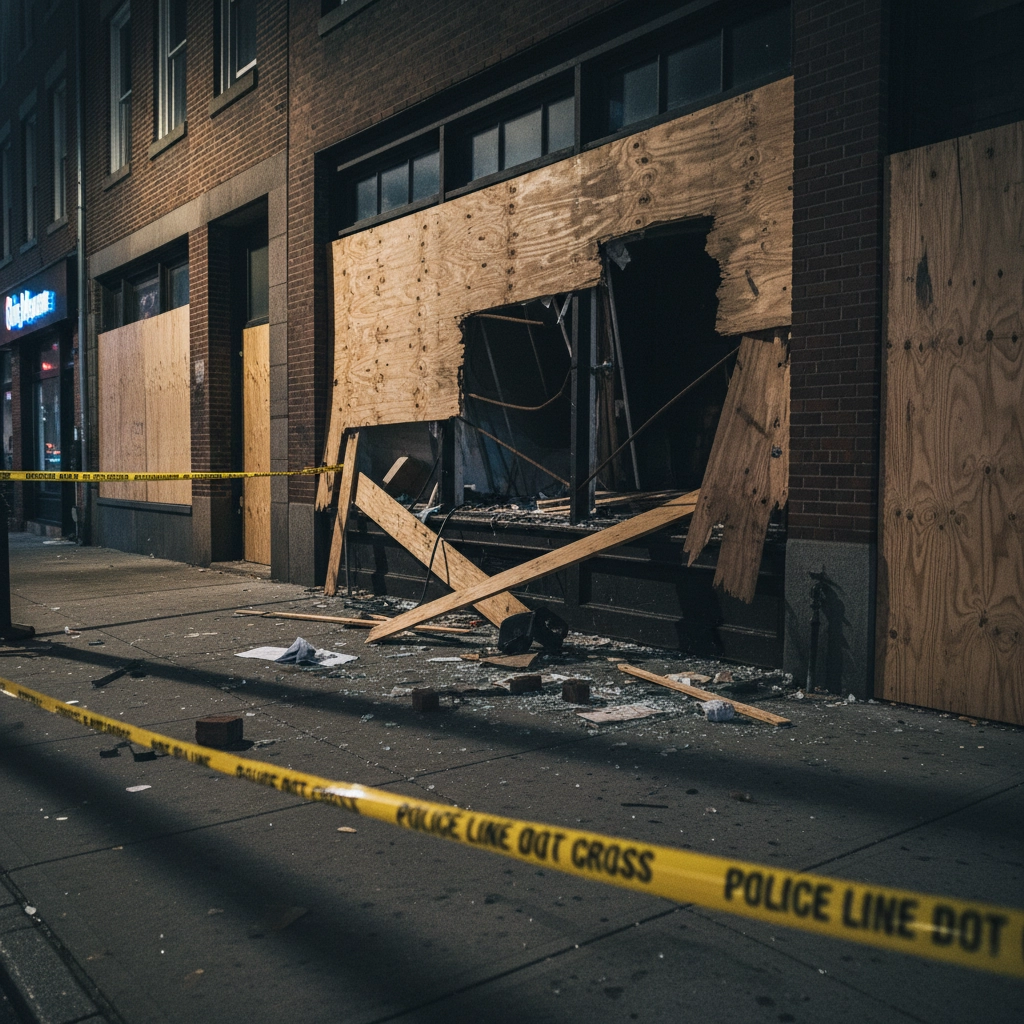
Board-up installations aren't permanent solutions, but they need regular maintenance while in place. Philadelphia's weather conditions can loosen fasteners, warp materials, and create new security vulnerabilities over time.
Schedule weekly inspections for the first month, then monthly checks for extended installations. Look for loose boards, damaged materials, or signs of attempted break-ins. Early detection prevents minor issues from becoming major problems.
The Real Cost of Mistakes
These mistakes don't just cause inconvenience: they create financial disasters. Poor board-up decisions can:
- Increase restoration costs by 30-50%
- Delay insurance claim processing for months
- Result in liability lawsuits from injuries or secondary damage
- Violate insurance policy requirements and void coverage
- Create building code violations that halt restoration work
Philadelphia's competitive rental market means extended downtime costs more than just repair expenses. Every week your property sits damaged is lost rental income that affects your bottom line.
Professional Board-Up Services Make the Difference
Emergency situations require immediate expertise, not trial-and-error learning. Professional board-up services understand Philadelphia's specific challenges, from building codes to weather patterns to neighborhood security concerns.
The right partner handles permitting, uses appropriate materials, provides proper documentation, and maintains installations until restoration begins. They understand insurance requirements and work with adjusters to expedite claim processing.
Ready to Protect Your Philadelphia Properties?
Don't wait for an emergency to find qualified board-up services. Having a reliable partner identified before you need them ensures fast response when damage occurs.
Contact C&A Property Services today to discuss comprehensive security solutions for your Philadelphia properties. Our experienced team understands the unique challenges of protecting damaged buildings in Philadelphia's diverse neighborhoods. We handle everything from emergency response to ongoing maintenance, ensuring your properties stay secure and your insurance claims process smoothly.
Call us now to set up emergency response protocols for your properties. When disaster strikes, you'll be ready.
Leave a Reply